

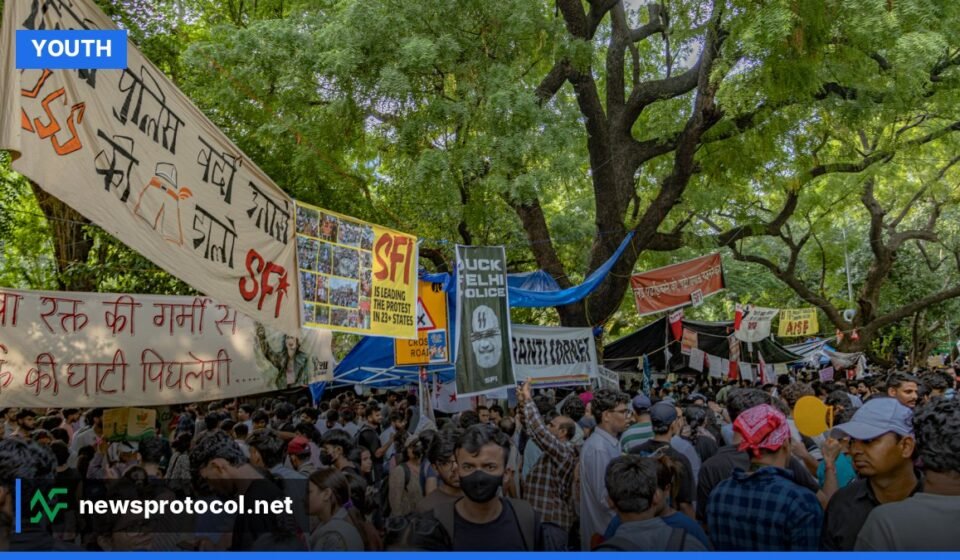

Gen Z political movements in India have shifted from satirical street protests to sophisticated digital campaigns, influencing both opposition groups and the ruling Bharatiya Janata Party (BJP) after the Cockroach Janta Party’s success.
Key Facts
- Nearly 50% of India’s 1.4 billion population is under 25 (2026). 【Source 1】
- Education minister Dharmendra Pradhan resigned on July 30, 2026 following youth-led pressure. 【Source 1】
- The Cockroach Janta Party began in May 2026 as a satirical protest against exam-paper leaks. 【Source 2】
- Modi’s Instagram-style videos increased by 40% in the month after the resignation. 【Source 1】
- Three new Gen Z-focused NGOs launched between August and October 2026, each registering over 10,000 members online. 【Source 3】
What new forms of activism are Gen Z Indians adopting?
Gen Z activists now blend on-ground rallies with coordinated “meme-storms” on Instagram Reels, X (formerly Twitter) and regional short-video apps. The goal is simple: keep issues trending while dodging traditional media blackouts.
Political analyst Nilanjan Mukhopadhyay put it plainly: “The threshold of fear has been broken. People are no longer scared to go and step out and protest.” 【Source 1】 That confidence fuels a dual strategy. Flash-mob protests fill city centers. Rapid-response hashtag campaigns reach millions within minutes.
How has the BJP altered its outreach to Gen Z?
After the education minister resigned, the BJP intensified its digital presence. Prime Minister Narendra Modi began posting vertical videos tailored for Instagram and short-form platforms, a format senior leaders had never used before.
Party lawmakers have also adopted youth slang in parliamentary speeches and public rallies, trying to bridge the age gap. Most cabinet members remain over 60. The shift suggests the party now sees Gen Z as a pressure group capable of shaping policy narratives, not merely a voting bloc.
Why are digital-first organizing methods important for Indian youth?
India’s internet penetration hit 65% in 2025, and mobile devices are the primary access point for anyone under 25. That connectivity allows rapid mobilization without reliance on established party structures.
“An arrogant government which did not blink for 12 years was forced to blink when the youth united,” said Saurav Das, spokesperson for the Cockroach Janta Party. 【Source 2】 The quote shows how digital tools turned a fringe satire into a national watchdog.
What other Gen Z-led groups have emerged after the Cockroach protests?
Three notable organizations have entered the scene:
| Group | Core Issue | Membership (online) |
|---|---|---|
| Future India Forum | Education reform | 12,300 |
| Green Pulse India | Climate action | 15,800 |
| SkillBridge Coalition | Youth unemployment | 11,450 |
All three cite the Cockroach Janta Party’s “watchdog” model as inspiration. Each emphasizes non-partisan pressure rather than electoral ambitions.
How are traditional opposition parties responding?
The Indian National Congress (INC) and Aam Aadmi Party (AAP) have begun recruiting young digital strategists to craft “youth-centric” manifestos. At a recent rally, INC leader Rahul Gandhi promised a “digital charter” aimed at expanding broadband in rural schools, a direct nod to Gen Z concerns about education access.
These parties also invoke the earlier protest in their messaging, linking the demand for ministerial accountability to broader calls for transparency.
What risks do Gen Z activists face?
Public sympathy runs high, but pro-government online mobs have started publishing personal details of protesters, a tactic known as “doxxing.” The intimidation is designed to deter future street actions.
Human-rights observers warn that such tactics could revive the climate of fear the Cockroach Janta Party helped to break.
How does this evolution affect future elections?
Analysts remain divided. Some, like Mukhopadhyay, argue the energy may translate into a “youth vote swing” against the BJP in the 2029 general election. Others note that without a formal party structure, the movement’s influence may stay limited to issue-based pressure.
Even so, the BJP’s recent outreach, from short videos to slang-laden speeches and youth-focused policy promises, signals that Gen Z is now a decisive factor in Indian electoral calculus.
What does the Cockroach Janta Party’s legacy teach new activists?
The movement proved that a loosely organized, digitally savvy group can force a cabinet-level resignation without the backing of established parties. Its decision to stay a “pressure group” rather than become a formal party resonates with many young Indians who distrust traditional politics.
For a deeper look at the original protest, see the article Cockroach Janta Party Protest: Delhi Turns Into a Fortress as Leaders Are Detained
FAQ
What is the Cockroach Janta Party?
A satirical, youth-led movement that began in May 2026 demanding the resignation of Education Minister Dharmendra Pradhan over exam-paper leaks.
How many Indians are under 25?
Nearly half of India’s 1.4 billion people, about 700 million, are younger than 25 as of 2026.
Why did the education minister resign?
Intense pressure from the Cockroach Janta Party’s street protests and online campaigns forced his resignation on July 30, 2026.
Are Gen Z movements in India forming political parties?
Most groups, including the Cockroach Janta Party, state they aim to remain watchdogs rather than formal parties.
What platforms do Indian Gen Z activists use?
Instagram Reels, X, regional short-video apps, and WhatsApp groups are the primary tools for rapid mobilization.
Sources: Yahoo News – WTOP News – NewsdayUpdated: October 23, 2026.