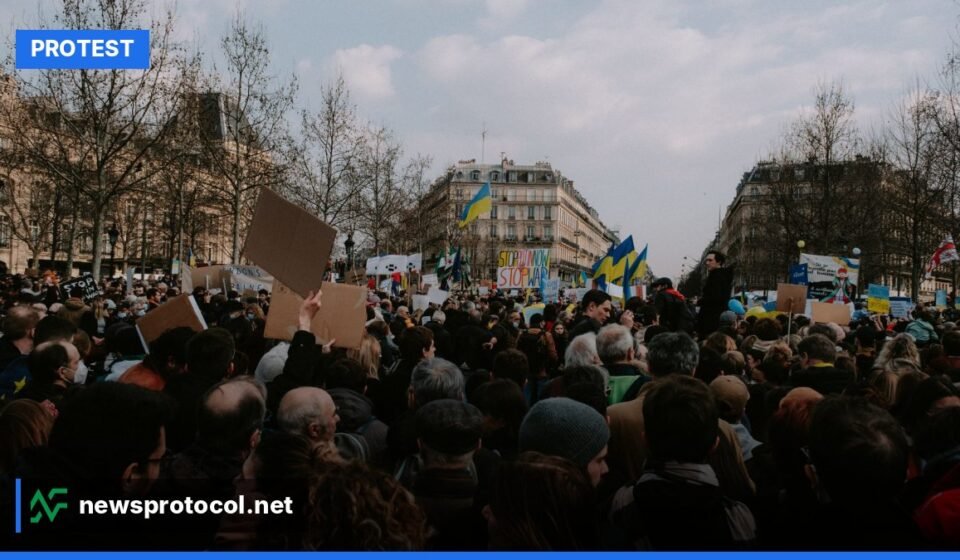

France protests today have escalated as President Emmanuel Macron announced a ban on “illegitimate” demonstrations and extended night curfews in several major cities on October 22, 2026.
Key Facts
- 1,800 arrests nationwide since the weekend riots – source: Newsweek
- Curfews imposed in Paris, Lille, Nice, Lyon, Marseille and Toulon – source: The Guardian
- Macron’s “illegitimate” protest ban applies to gatherings without recognized authority – source: NBC News
- 174 of the 2,500 arrested have been remanded in custody – source: The Guardian
What new restrictions has the French government imposed on protests?
President Emmanuel Macron declared that “illegitimate” demonstrations will be banned in the coming days, allowing only those organized by recognized groups such as trade unions to proceed, and even then only on altered routes to protect city centres and public buildings – source: The Guardian. The ban covers areas around the Élysée Palace, the Parliament, and major train stations in Paris, and similar restrictions have been issued for Lyon, Marseille, Nice and Toulon – source: NBC News.
How many people have been arrested since the unrest began?
French authorities reported a total of 1,800 arrests nationwide following the violent clashes that erupted over the weekend – source: Newsweek. Of the 2,500 people detained since the start of the riots, 174 have been remanded in custody while more than 900 face prosecution – source: The Guardian.
| Metric | Number |
|---|---|
| Total arrests (nationwide) | 1,800 |
| People detained since riots began | 2,500 |
| Remanded in custody | 174 |
| Prosecuted | >900 |
Why are France protests today spreading beyond schools?
The demonstrations originated in a high school in Créteil over staff shortages and dilapidated facilities, but quickly broadened as trade unions added demands for higher wages, better pensions and relief from soaring living costs – source: NBC News. The escalation into looting and arson, including the burning of the historic town hall in Limoges, prompted the government to label many of the actions as “political and seditious acts by ultra‑far‑left groups” – source: The Guardian.
How are businesses responding to the heightened security measures?
Shops in central Paris and other affected cities have begun boarding up windows and hiring private security firms to deter looting, as reported by French media – source: The Guardian. The expanded curfews and protest bans are intended to protect commercial districts, but some business owners argue that the restrictions also limit legitimate consumer traffic during the holiday shopping season.
What is the political context of France protests today?
The unrest arrives six months before the 2027 presidential election, intensifying debates over immigration, cost of living, and the role of far‑left activism. Internationally, U.S. President Donald Trump has cited the French turmoil as evidence of the dangers of liberal immigration policies, sharing a graphic that compares gun‑crime statistics between the United States and France – source: Newsweek. While Trump’s comments are unrelated to the French legal process, they have amplified the political stakes surrounding the protests.
For a detailed look at the earlier curfew measures, see our previous coverage France Protests: Curfews Imposed in Paris, Lille and Nice.
FAQ
When did President Macron announce the ban on “illegitimate” protests?
Macron made the announcement on Thursday, October 22, 2026, after a meeting with intelligence chiefs and senior ministers.
Which cities are currently under night curfew?
Night curfews are in effect in Paris, Lille, Nice, Lyon, Marseille, and Toulon.
What defines an “illegitimate” protest according to the French government?
An “illegitimate” protest is a gathering organized by individuals or groups without recognized authority, such as trade unions, and therefore subject to a ban.
How many arrests have been made since the protests began?
Authorities have made 1,800 arrests nationwide, with 174 of the 2,500 detained individuals remanded in custody.
Will student demonstrations be allowed to continue?
Student protests organized by recognized unions may proceed, but routes can be altered and they are subject to security checks.
Sources: Newsweek · The Guardian · NBC News. Updated: October 22, 2026.