

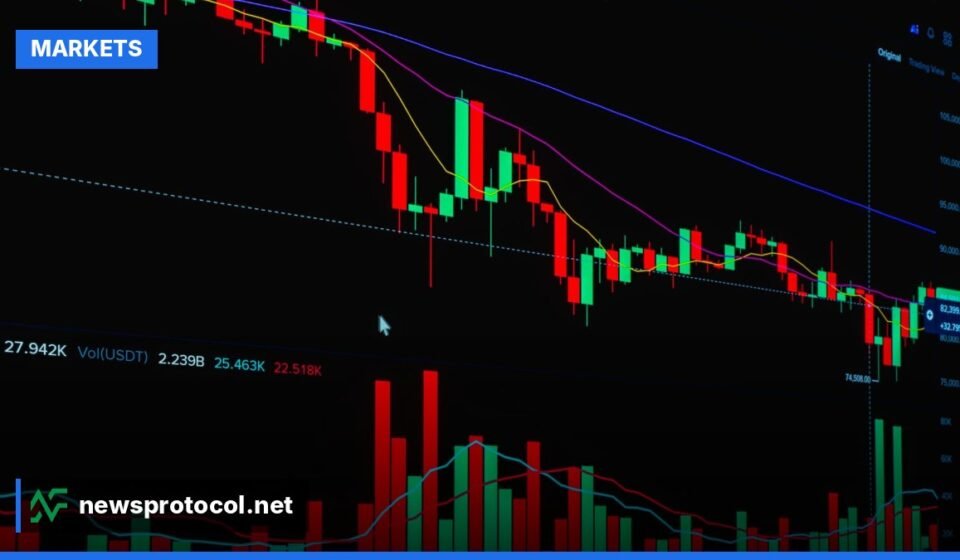

Stocks fell hard on Friday. AI stocks sold off. Oil climbed. Washington trimmed tariffs. The three shocks formed a stock markets perfect storm.
What triggered the stock markets perfect storm on October 23, 2026?
AI-focused equities corrected sharply. Crude oil edged higher on geopolitical fears. Washington announced selective tariff cuts for Canada. Any one of these could rattle traders. All three landed on the same day.
Investors dumped AI data-center builders. Bloomberg reported a wave of selling across the sector. Oil futures jumped 3.75% on fears of a drawn-out conflict in Iran, according to Yahoo Finance. Reuters flagged the US-Canada tariff move, a policy shock that sharpened the nervousness.
Key Facts
- AI-related stocks fell an average of 7% on Friday, extending a week-long sell-off.
- Crude oil rose 3.75% after reports of heightened tensions in the Middle East.
- The US announced a partial reduction of Canadian tariffs ahead of the midterm elections.
- Major indices closed lower: the S&P 500 down 1.3%, Nasdaq Composite down 1.7%.
- Credit default swap spreads for AI firms narrowed slightly, indicating modest risk reassessment.
How did AI sell-offs contribute to the stock markets perfect storm?
AI companies powered Wall Street’s growth for years. That engine sputtered this week. Earnings worries and funding doubts sparked the sell-off. Yahoo Finance noted that investors are “dumping the companies building AI’s data centers.” The pain spread to broader tech and dragged the Nasdaq down 1.7%, even as other technology stocks posted mixed results.
Analysts point to two core drivers: the high cost of AI infrastructure and doubt over whether revenues can hold up. Pressure on AI stocks fed overall volatility. That feedback loop dragged down sectors with no direct link to AI.
Why did oil prices rise and what impact did that have?
Reports of a potential prolonged Iran-U.S. conflict sent oil climbing. Yahoo Finance recorded a 3.75% jump in oil futures, enough to push Brent toward $113 a barrel. Costlier energy squeezes corporate profit margins. Manufacturers and airlines feel it first. Equity markets took the added stress badly.
Energy stocks gained from the price rise. The net effect stayed negative. Investors feared wider inflationary pressure.
What role did US tariff policy play in the perfect storm?
Reuters reported that the United States will cut some Canadian tariffs before the midterm elections. The goal is to boost trade. The timing raised questions about the competitive market for North American exporters. Coming alongside the AI and oil shocks, the announcement magnified market jitters.
Market watchers call the adjustment a “policy shock.” Combined with sector-specific pressures, it deepened the sell-off across indices.
Which sectors showed resilience amid the turmoil?
Not everything sank. Apple reclaimed the top spot on the S&P 500, overtaking Nvidia for the fifth time, Yahoo Finance reported. Consumer staples and utilities outperformed too, giving portfolios a modest defensive buffer.
| Sector | Performance (Oct 23) | Key Driver |
|---|---|---|
| AI/Data Centers | -7% | Funding concerns |
| Energy | +2.1% | Oil price rise |
| Technology (non-AI) | -1.4% | Spillover from AI sell-off |
| Consumer Staples | -0.3% | Defensive demand |
| Utilities | -0.5% | Stable cash flows |
How are investors responding to the perfect storm?
Money is moving to safer ground. Credit default swap spreads for AI firms narrowed by 0.3 points, a sign that perceived default risk eased slightly. Sentiment stays cautious all the same. Some investors are reallocating into dividend-paying stocks and Treasury bonds. Others are waiting for earnings reports from major tech firms due next week.
What does the stock markets perfect storm mean for everyday investors?
The AI correction continues. Oil keeps swinging. Policy keeps shifting. Volatility looks set to persist while these forces interact. Diversification matters now. So does attention to sector fundamentals. For tips on riding out market turbulence, see our guide on digital tools for investors
FAQ
Why is the AI sell-off affecting non-AI stocks?
The AI correction cut risk appetite across the market. Investors responded by selling broader technology holdings.
Will oil price spikes continue?
Oil prices track geopolitical developments. Ongoing tension in the Middle East suggests further upside risk.
How do tariff changes influence stock markets?
Tariff changes alter trade costs. That hits corporate earnings forecasts and creates short-term uncertainty.
Is the stock markets perfect storm a short-term event?
Analysts expect heightened volatility for the next few weeks. Earnings data and policy outcomes will decide how long it lasts.
What sectors are safest during this storm?
Consumer staples, utilities and established tech leaders like Apple have held up best so far.
Sources: Yahoo Finance – ReutersUpdated: October 23, 2026.