

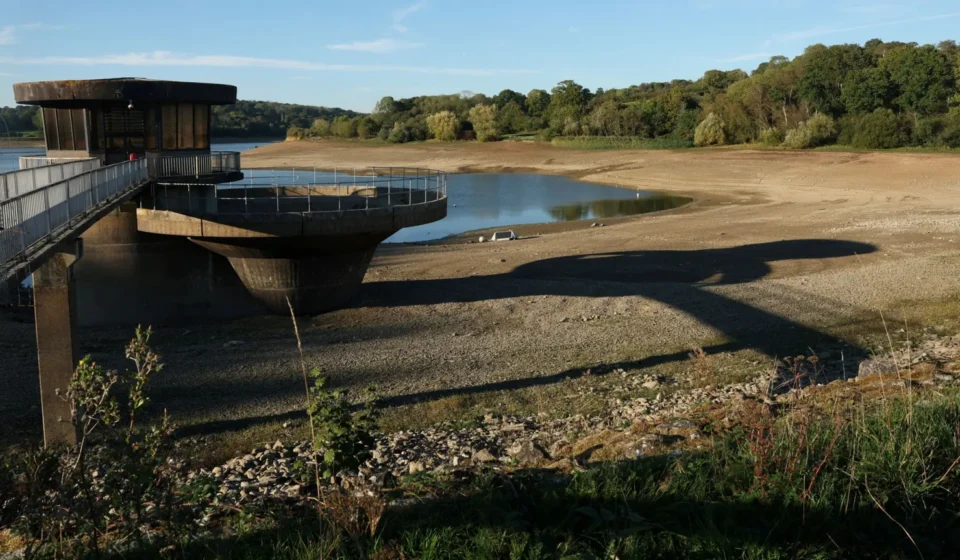

Drought in the United Kingdom has reached its most serious level in decades. On Thursday, 15 October 2026, the Environment Agency declared severe drought in six areas of southern England after the hottest summer on record and months of low rainfall. Two major reservoirs have fallen to less than a fifth of their capacity, and water companies are asking for wider restrictions to protect supplies.
The government says household taps will keep running. But hosepipe bans remain in place, and new limits on businesses such as golf clubs and car washes could follow.
Drought in the United Kingdom: Key Facts
- Severe drought declared in: Cornwall, Devon, Dorset, Somerset, East Sussex and West Sussex
- Driest April to September in more than a century in south-east and south-west England
- Wimbleball reservoir: around 15% full
- Ardingly reservoir: about 19% full
- Normal level for October: about 75%
- Hosepipe ban in Devon, Cornwall, the Isles of Scilly and parts of Dorset and Somerset since 8 August, with no end date
Where Has Severe Drought Been Declared?
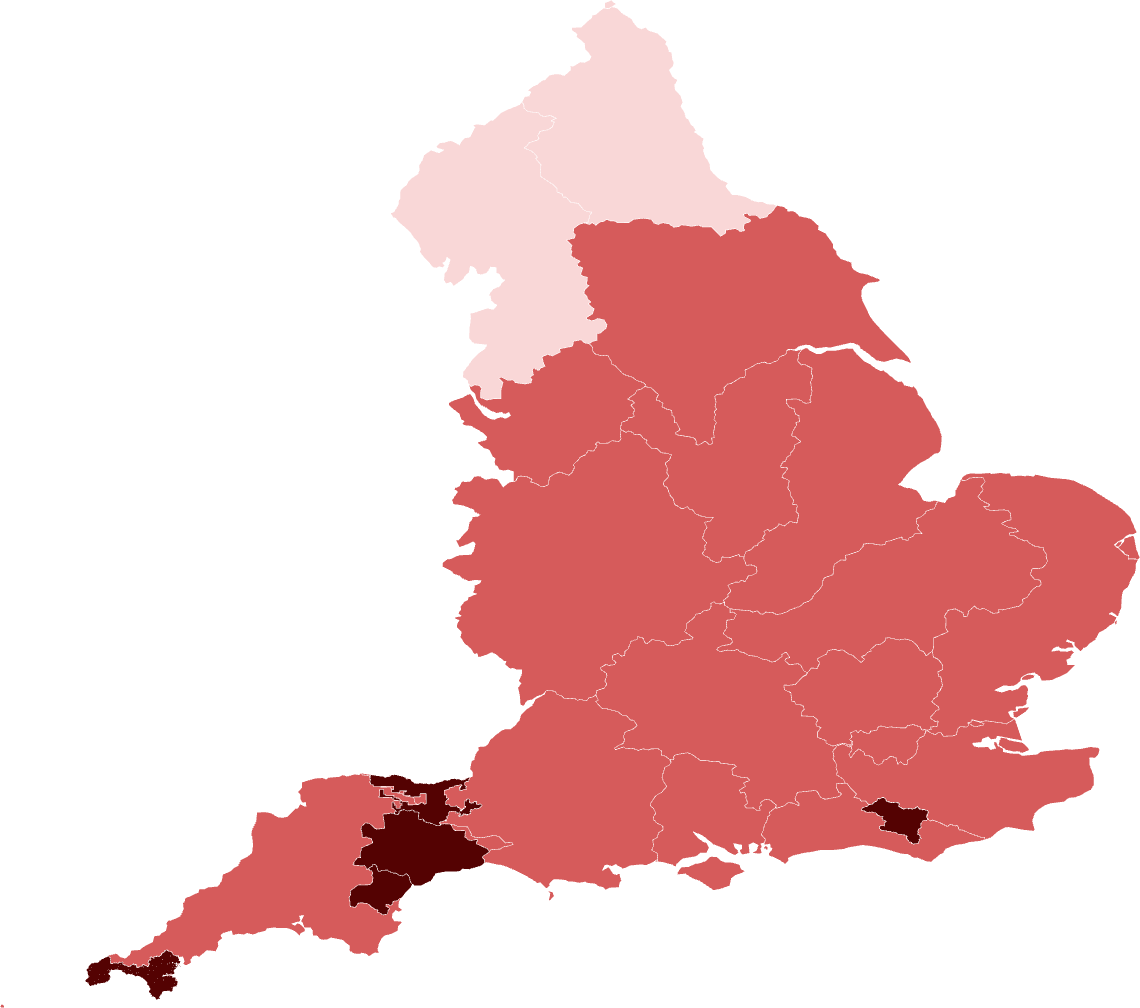
The announcement followed a meeting of the National Drought Group, which reviewed water resources across England. Parts of six counties have moved into severe drought: Cornwall, Devon, Dorset, Somerset, East Sussex and West Sussex.
Environment Secretary Dame Angela Eagle said the country is facing “a level of drought” not seen “for decades”, and urged people to use water wisely in the coming weeks.
UK Reservoir Levels: How Low Is the Water?
The move to severe drought was triggered mainly by two large reservoirs. Wimbleball on Exmoor supplies homes in east and north Devon, Somerset and west Dorset. Ardingly in West Sussex serves around 95,000 properties in Haywards Heath, Uckfield and nearby areas. The Environment Agency now describes Wimbleball and Colliford as exceptionally low.
| Reservoir | Area | Current level |
|---|---|---|
| Wimbleball | Exmoor, Somerset | around 15% |
| Ardingly | West Sussex | about 19% |
| Stithians | Cornwall | about 22% |
| Burrator | Devon | about 34% |
| Colliford | Cornwall | about 35% |
| Roadford | Devon | about 37% |
For comparison, reservoirs in England would normally be about 75% full at this time of year.
Smaller reservoirs are also a worry. Drift and Stithians supply about 56,000 households in Cornwall, while the Tottiford and Venford group supplies around 47,000 households in Devon.
Why Is the UK in Drought?
Three things came together this year:
- Record heat: the UK had its hottest summer on record.
- Very little rain: the south-east and south-west had their driest April-to-September period in more than 100 years.
- High demand: people used far more water during the heat. Wessex Water said demand stayed above 400 million litres a day for 48 days, the toughest year it has seen.
Low river levels also mean less dilution of sewage, which raises the risk of pollution and poorer water quality.
What the Government Is Doing
The government says declaring severe drought allows early action to protect water before supplies are disrupted. The main steps are:
- Daily monitoring of reservoir and river levels, plus tougher water quality checks.
- More compliance checks on businesses that take water from rivers and groundwater, to make sure they only take what they are allowed.
- Drought orders for South East Water and South West Water, letting them release millions of litres less water from reservoirs into rivers each day.
- Public supply first: Water Minister Emma Hardy told the Environment Agency to put public supplies first where there is an unavoidable trade-off with environmental rules.
Environment Agency chief executive Philip Duffy said recovery “depends on both rainfall and how much water we use”, and asked everyone to cut their use to protect rivers, farmers and wildlife.
Hosepipe Bans and Possible Business Restrictions
A hosepipe ban has been in force across Devon, Cornwall, the Isles of Scilly and parts of Dorset and Somerset since 8 August. South West Water has not set an end date. Wessex Water introduced its first hosepipe ban in 50 years in August and says it will stay for the foreseeable future.
The next step could be non-essential use bans. South East Water, South West Water and Southern Water have asked to restrict businesses such as golf clubs, private schools and commercial car washes. So far, the Environment Secretary has not approved those requests. Southern Water has also applied for an order to restrict water use in Hampshire and the Isle of Wight.
Will Taps Run Dry?
The government says household supplies will continue. South East Water, which supplies more than two million customers, says standpipes remain part of its drought plan but are unlikely to be needed.
Water companies are focusing on leaks. South East Water says it has more than doubled its leak teams in the affected area, from seven to 16. Leaks there have fallen from 181 to 97, and more than 1,300 have been repaired since 1 April. Wessex Water has moved water from more resilient sources and lowered pressure in some communities.
Impact on Farmers
The National Farmers’ Union described 2026 as a “torrid year” for farmers. Harvesting was difficult, and keeping livestock watered was a struggle. The union warns that a dry winter could also hurt next year’s crops.
What Happens Next?
A wet winter has been forecast, but its timing is unclear. Reservoirs need sustained rainfall over several months to recover, so restrictions could last well into 2027. A decision on non-essential use bans is the next key step to watch.
How to Save Water During the Drought
- Take shorter showers instead of baths.
- Turn off the tap while brushing your teeth.
- Only run washing machines and dishwashers when they are full.
- Fix dripping taps and leaking toilets quickly.
- Use a watering can, not a hosepipe, where a ban is in place.
FAQ: Drought in the United Kingdom
Which parts of the UK are in severe drought?
Parts of Cornwall, Devon, Dorset, Somerset, East Sussex and West Sussex in southern England were moved into severe drought on 15 October 2026.
What does severe drought status mean?
It allows the government, the Environment Agency and water companies to take stronger action early, such as daily monitoring, drought orders and extra restrictions, to protect public supplies before they are disrupted.
Is there a hosepipe ban in the UK?
Yes, in some areas. A ban has applied in Devon, Cornwall, the Isles of Scilly and parts of Dorset and Somerset since 8 August 2026, and Wessex Water also has a ban in place. There is no end date yet.
How low are UK reservoirs?
Wimbleball is around 15% full and Ardingly about 19%, compared with a normal level of about 75% at this time of year.
Will my water supply be cut off?
The government says household supplies will not be interrupted, and water companies say standpipes are unlikely to be needed.
This story is developing and will be updated.
Sources: BBC News, The Guardian, Environment Agency and Department for Environment, Food & Rural Affairs statements.