

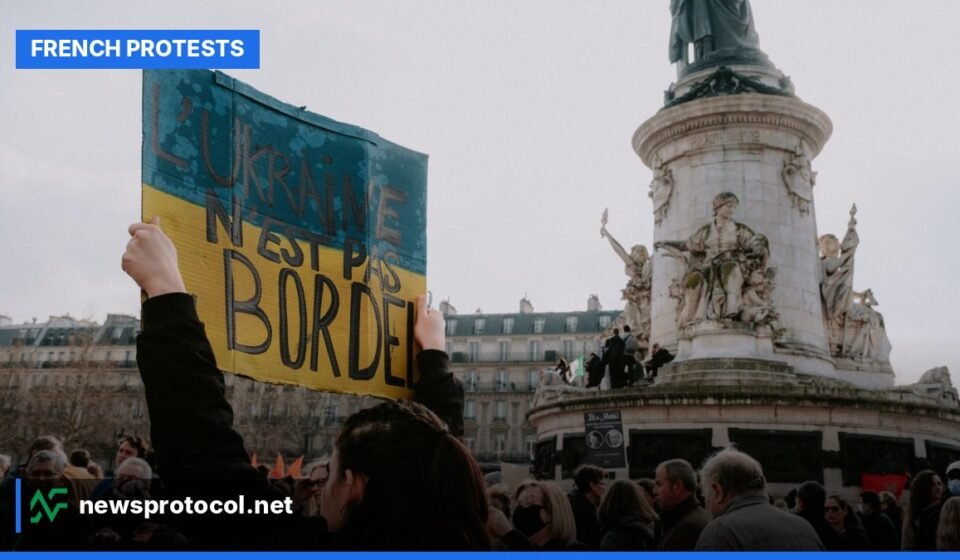

What is France protesting about? France has experienced widespread protests driven by a combination of factors, including deep-seated frustrations over the cost of living, perceived government inaction, educational system shortcomings, and a growing wealth divide. These grievances have fueled significant social and political unrest across the country.
The protests, which have at times turned violent, reflect a broader discontent with the current state of affairs in the French Republic, a unitary semi-presidential republic with Paris as its capital, and an estimated population of over 69.1 million in 2026, according to Wikipedia.
Key Facts
- Protests in France expanded from education to broader social and economic issues.
- Initial demands included more staff and resources for schools.
- Key drivers of unrest include the cost of living and wealth inequality.
- Over 2,000 arrests were made during a single weekend of protests in October 2026.
- Curfews were imposed in cities like Paris, Bordeaux, and Lille to manage the violence.
What Are the Primary Reasons for Protests in France?
The primary reasons for protests in France stem from a convergence of specific triggers and long-standing societal issues. While initial demonstrations in September 2026 began with student and teacher strikes in the Parisian suburbs demanding more staff and resources for schools, these quickly escalated into a national movement. This broader unrest reflects widespread frustration with the cost of living, perceived government inaction on economic disparities, and a growing wealth divide, according to CNN.
The education system’s understaffing and overcrowding have been a significant concern for students. When a heavy-handed police response, including a video of an officer using a banned headlock on a girl, sparked public anger, it further galvanized hundreds of thousands of people to take to the streets. These demonstrations highlight a deep desire for social and political change among the French population.
How Did the Protests Evolve Beyond Education?
The protests in France evolved rapidly beyond initial education-related grievances, transforming into a broader expression of public discontent. What began with specific demands for educational improvements in September 2026 quickly tapped into a wider reservoir of frustration over economic issues and social inequality. Within weeks, the movement encompassed concerns about affordability and the perceived lack of government response to the financial struggles of ordinary citizens.
According to CNN, Maria Pallas, a 57-year-old member of a major French trade union, articulated this sentiment during a protest in Paris in October 2026. She stated, “There’s the cost of living. There’s unemployment. There’s a bunch of things. A young person will go looking for work, we’ll promise him a lot, and he’ll end up with nothing.” This highlights how the protests became a platform for diverse social and economic grievances, indicating a nationwide desire for significant change.
What Was the Scale of Recent Protest Violence in France?
The scale of recent protest violence in France was significant, leading to widespread destruction and numerous arrests. Over half a million people demonstrated across France on a Saturday in October 2026, with many protests remaining peaceful. However, violence erupted in several locations, particularly as night fell, CNN reported. In Paris, masked individuals looted shops and started fires near areas like Place de la République and Les Halles. Lyon saw its tourist office torched, and in Limoges, the spire of a 143-year-old town hall collapsed in flames, evoking memories of the Notre Dame Cathedral fire. Justice Minister Gérald Darmanin stated that approximately 3,000 shops were looted across the country.
During that weekend, more than 2,000 people were arrested, with at least two deaths and reports of serious injuries, including two individuals who lost their hands. Police responded with tear gas and engaged in running battles with rioters. Prime Minister Sébastien Lecornu credited “targeted curfews” with helping to restore calm, while Interior Minister Laurent Nuñez acknowledged some responsibility for the situation, also pointing to political opponents and troublemakers for their role in the destruction. For more details on recent government responses, you can read about how the French government banned ‘illegitimate’ demonstrations
What Measures Has the French Government Taken in Response?
The French government has implemented several measures in response to the protests, aiming to restore order and address underlying grievances. Following the widespread violence in October 2026, authorities promised a “massive” police presence for planned demonstrations and imposed localized curfews in affected cities. Paris police announced an overnight curfew from 11 p.m. in the worst-hit areas, and similar curfews were enacted in cities such as Bordeaux and Lille, according to CNN. You can learn more about curfews imposed in Paris, Lille, and Nice
Prime Minister Sébastien Lecornu noted the effectiveness of these targeted curfews in maintaining calm. President Emanuel Macron condemned the destruction, stating, “Those who destroyed must pay. Those who looted must pay back. Those who sought to bring down the Republic will be held accountable.” He also pledged to hold meetings to discuss “concrete proposals” and listen to protesters’ demands. Despite these assurances, many protesters remain skeptical about the government’s willingness to address their concerns effectively.
What are the Political Implications of the French Protests?
The political implications of the French protests are significant and are expected to shape the country’s political market, particularly with the next presidential election six months away. The unrest has deepened existing fault lines between major political parties. Far-right leader Marine Le Pen, who is reportedly leading in polls, attributed the violence to “legitimate social grievances” being “held hostage by the far left.” Conversely, her hard-left rival, Jean-Luc Mélenchon, has consistently defended the students’ right to protest, as reported by CNN.
The government’s handling of the crisis and its response to public demands will likely be critical factors influencing voter sentiment. The widespread discontent over the cost of living and perceived government inaction could significantly impact the electoral prospects of incumbent parties and boost opposition movements. This period of social upheaval shows the challenges facing France’s political leadership in addressing fundamental societal issues and maintaining public trust. The political fallout could prove significant, deepening faultlines between the major parties with an election to succeed French President Emanuel Macron just six months away.
FAQ
What are the main causes of recent unrest in France?
The main causes of recent unrest in France include widespread frustration over the rising cost of living, perceived government inaction on economic disparities, an overcrowded and understaffed education system, and a growing wealth divide. These issues collectively fuel public anger and a desire for social and political change.
How many people have been arrested during the protests?
During a single weekend of protests in October 2026, French authorities arrested over 2,000 people. These arrests occurred as peaceful demonstrations escalated into violence, with incidents of looting, arson, and clashes with law enforcement across several cities.
Have curfews been imposed in France due to the protests?
Yes, curfews have been imposed in several French cities, including Paris, Bordeaux, and Lille. These measures were implemented by authorities in October 2026 to help manage and de-escalate the widespread violence and destruction that occurred during intensified protests.
What specific demands are protesters making?
Protesters initially demanded more staff and resources for the education system. However, the movement quickly expanded to include broader demands related to the cost of living, unemployment, and calls for greater government accountability and action on social and economic inequality.
What is the government’s stance on the protests?
The French government has condemned the violence and destruction, promising accountability for those involved in looting and rioting. President Emanuel Macron has also committed to holding discussions and listening to protesters’ demands, although many remain skeptical of concrete government action.
Sources: Wikipedia – Wikipédia – France.fr – CNNUpdated: November 9, 2026.