

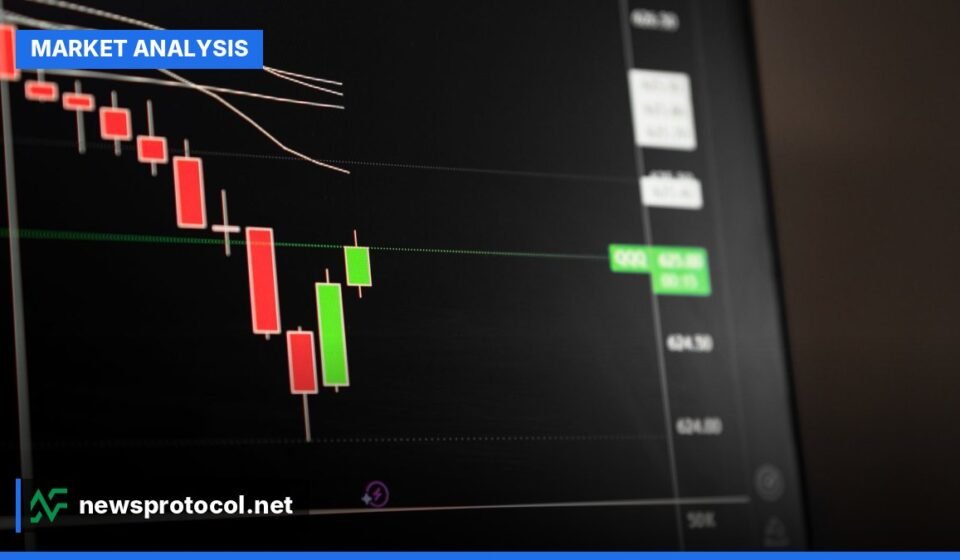

The S&P 500 is facing a potential bearish sector outlook in late 2026, with analysts pointing to specific sectors likely to underperform amidst broader economic shifts and tightening financial conditions. This projection suggests investors should prepare for increased volatility and strategic reallocations.
Key Facts
- Analysts predict a bearish S&P 500 sector outlook for late 2026.
- Specific sectors, including Technology and Discretionary, may face significant headwinds.
- Rising interest rates and inflation could impact corporate earnings.
- Defensive sectors like Utilities and Healthcare might offer relative stability.
- Market volatility is expected to increase through the end of 2026.
What Factors Contribute to a Bearish S&P 500 Sector Outlook?
A bearish S&P 500 sector outlook for late 2026 is primarily driven by several macroeconomic factors, including persistent inflation, rising interest rates, and a potential slowdown in global economic growth. These elements combine to create a challenging environment for corporate profitability and investor sentiment.
According to a November 5, 2026 report by Goldman Sachs, “The true test is yet to come, and we must first navigate 2026.” The report highlights that implied volatility in stocks is finally catching up, indicating growing market anxiety. This means that while individual stock volatility and credit markets have already priced in considerable distress, the broader market indices are now reflecting this concern.
Which S&P 500 Sectors Are Most Vulnerable to a Downturn?
Several S&P 500 sectors are particularly vulnerable during a bearish market phase, primarily those sensitive to economic cycles and consumer spending. These include Technology, Consumer Discretionary, and potentially parts of the Industrials sector.
The Technology sector, which has seen substantial growth in recent years, could face pressure from higher interest rates, impacting valuations of growth stocks. Goldman Sachs’ TMT expert, Peter Callahan, noted that the semiconductor sector’s forward P/E ratio has fallen to approximately 16x, reaching a valuation trough in the current AI cycle. This suggests that even high-growth areas are not immune to downward revisions.
Consumer Discretionary, which relies heavily on consumer spending, is also at risk as inflation erodes purchasing power and higher interest rates deter borrowing for large purchases. The Industrials sector could see reduced demand if economic activity slows globally, affecting manufacturing and transportation companies. For example, a similar sensitivity to economic shifts can be seen in the TSX’s reaction to lower oil prices and inflation worriesdemonstrating how broad economic concerns translate into sector-specific impacts.
Understanding the Impact of Rising Rates on Growth Stocks
Rising interest rates have a disproportionate impact on growth stocks, which are prevalent in the Technology sector. Higher rates increase the cost of capital for companies and reduce the present value of future earnings, making these stocks less attractive to investors. This can lead to significant valuation adjustments, even for companies with strong underlying fundamentals.
The Goldman Sachs report also pointed out that “stocks no longer surge upwards.” For instance, Intel’s average daily decline now surpasses its average daily gain, a trend echoed in semiconductor ETFs and the Nasdaq 100. This shift in market dynamics indicates that downside volatility is becoming more extreme than upside movements, a classic sign of a more challenging market environment.
What Role Does Inflation Play in the Bearish Outlook?
Inflation plays a critical role in the bearish S&P 500 sector outlook by increasing operational costs for businesses and reducing consumer purchasing power. This dual impact can squeeze profit margins and dampen demand, leading to lower earnings and stock prices across various sectors.
Specifically, persistent inflation can force central banks to maintain or further raise interest rates, tightening financial conditions and making it more expensive for companies to borrow and expand. This environment can also shift consumer preferences towards essential goods and services, negatively affecting discretionary spending and the sectors dependent on it.
Which Sectors Might Offer Stability During a Bearish Market?
During a bearish market, defensive sectors typically offer more stability due to their consistent demand regardless of economic conditions. These include Utilities, Healthcare, and Consumer Staples.
Utilities, for instance, provide essential services like electricity and water, ensuring stable revenue streams. Healthcare companies also tend to perform well as demand for medical services and products remains relatively inelastic. Consumer Staples, which include everyday necessities like food and household goods, similarly experience steady demand. While these sectors may not offer high growth potential, their stability can be attractive to investors seeking to preserve capital during volatile periods.
However, even defensive sectors face challenges. Goldman Sachs noted that “defensives are already expensive,” with dividend yield factors in the 90th percentile of the last decade and valuation factors in the 80th percentile. This indicates that while they offer safety, their current valuations may already reflect much of that defensive premium, suggesting limited upside.
Here is a summary of projected sector performance:
| Sector | Projected Outlook (Late 2026) | Key Drivers |
|---|---|---|
| Technology | Bearish | Higher interest rates, valuation adjustments, reduced growth expectations |
| Consumer Discretionary | Bearish | Reduced consumer spending, inflation impact on purchasing power |
| Industrials | Bearish to Neutral | Global economic slowdown, supply chain disruptions |
| Utilities | Neutral to Bullish | Stable demand for essential services, defensive characteristics |
| Healthcare | Neutral to Bullish | Consistent demand, inelasticity of medical services |
| Consumer Staples | Neutral to Bullish | Steady demand for essential goods, defensive characteristics |
What Investment Strategies Should Investors Consider for 2026?
For 2026, investors should consider adopting defensive investment strategies and focusing on diversification to navigate a potential S&P 500 bearish sector outlook. This includes rebalancing portfolios towards more stable sectors and potentially exploring alternative investments.
Diversification across different asset classes and geographies can help mitigate risks. For example, comparing different investment vehicles or exploring opportunities in less correlated markets can be beneficial. Investors might also consider strategies that involve hedging against market downturns, such as options or inverse ETFs, though these carry their own risks.
Goldman Sachs’ Prime Brokerage data indicates that hedge funds have been net buyers of U.S. equities for the first time in four weeks, with 73% of the buying driven by macro products, primarily short covering. This suggests a cautious re-engagement, but the overall net use for U.S. fundamental long-short strategies has fallen to 47%, positioning funds for a “bear market that has not yet happened.” This proactive positioning by institutional investors shows the prevailing cautious sentiment.
Another strategy involves focusing on companies with strong balance sheets, consistent free cash flow, and a history of dividend payments, as these tend to be more resilient during economic contractions. Understanding the long-term returns of index funds like VOO can also provide perspective on how broad market investments perform over time, even with short-term fluctuations.
FAQ
What does a “bearish sector outlook” mean for the S&P 500?
A “bearish sector outlook” for the S&P 500 means that specific industry groups within the index are expected to experience declining stock prices or underperform the broader market due to negative economic conditions or industry-specific challenges.
How long is this bearish S&P 500 sector outlook expected to last?
The current projections suggest this bearish S&P 500 sector outlook could extend through late 2026, influenced by ongoing macroeconomic factors such as inflation, interest rate policies, and global economic growth trends.
Are there any S&P 500 sectors that might perform well in a bearish market?
Yes, defensive S&P 500 sectors like Utilities, Healthcare, and Consumer Staples often perform relatively well in a bearish market because demand for their products and services remains stable even during economic downturns.
Should I adjust my investment portfolio based on a bearish S&P 500 sector outlook?
Given a bearish S&P 500 sector outlook, investors should consider adjusting their portfolios by rebalancing towards more defensive sectors, diversifying investments, and potentially exploring strategies to hedge against market volatility.
What are the primary risks associated with a bearish S&P 500 sector outlook?
The primary risks associated with a bearish S&P 500 sector outlook include potential capital losses, reduced investment returns, increased market volatility, and the possibility of a broader economic recession impacting corporate earnings and consumer confidence.
Sources: Wikipedia – Simple English Wikipedia – Langeek – Really-Learn-English.comUpdated: November 10, 2026.