
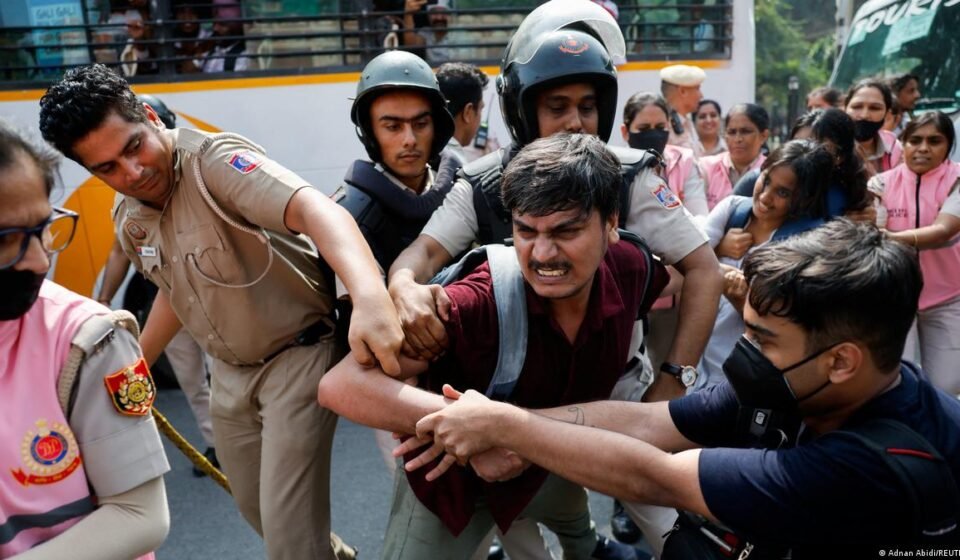

By Saturday afternoon, India’s capital looked less like a city and more like a fortress. Roads were barricaded, trains were cancelled, dozens of metro stations were closed, and police were packing young people onto buses before most could get near Jantar Mantar. This was the Cockroach Janta Party protest, a rally called by a Gen Z-led movement that wants India’s chief election commissioner to resign. Hundreds were detained, including the movement’s founder. Here is what happened on the ground, who is behind it, and why a voter list has pushed so many young Indians onto the streets.
What Happened at the Cockroach Janta Party Protest in Delhi
A Capital Turned Into a Fortress
Authorities went all in on Saturday. The BBC reported that tens of thousands of security personnel were deployed, roads were barricaded, and dozens of metro stations had been shut since Friday night. According to Al Jazeera, mobile internet was suspended, markets were closed and Jantar Mantar was sealed off before the rally began. Delhi Police had refused permission for the protest there and, the BBC noted, had not commented on the detentions.
The New York Times described thousands of mostly 20- and 30-somethings trying to gather across the city, only to be carried off by security forces and packed into buses.
Leaders Detained on a Plane
The first blow landed before the rally began. Police detained CJP founder Abhijeet Dipke and fellow leaders Saurav Das and Ashutosh Ranka on a flight from Mumbai after it landed in Delhi. Dipke shared video of officers boarding the aircraft and can be heard saying, “I have come to get arrested,” according to Al Jazeera. The group told the BBC the three had been taken to an undisclosed location, and Delhi Police have not commented.
With the top leaders in custody, the movement named Ajinkya Shinde as its designated leader. In a video, he told protesters that wherever police stopped them, that spot would become their own Jantar Mantar. Student activist Neha Bora, also detained, urged demonstrators to hold the line, the BBC reported.
The March That Began at a Gurdwara
The most vivid account of the day comes from the New York Times, which followed a group of protesters who spent Friday night at the Sri Bangla Sahib gurdwara. The crowd, which grew to about 300, included students, lawyers, farm workers, doctors and engineers, many of whom had travelled for hours from Bihar and Punjab. They had no formal leaders, only volunteers who took on coordinating roles.
Police officers stepped inside on Saturday morning but left without acting. Temple officials struck a deal: no protest inside, and no detentions inside. Around 10:30 am, the group marched onto the main road chanting against Prime Minister Narendra Modi and Gyanesh Kumar. Within a few hundred yards, police tightened a ring around them and began dragging people onto buses. Nobody made it to Jantar Mantar, about 1,000 yards away.
Simran, a 26-year-old lawyer, said she was stopped twice by police on her way. “I felt like a criminal in my own country,” she told the Times.
The App Built to Bring Detainees Home
Behind the scenes, volunteers had been building a workaround. According to the Times, police spent the week busing detained young people to remote edges of the city and dropping them there. In response, 25-year-old Rajiv Choudhary and others built an app, loosely called the Detainee Homecoming Plan, that tracks police buses and links detainees with volunteer drivers. On Saturday, he said, police were holding hundreds for much longer in detention centres, including at least two stadiums, and some of his volunteer drivers were detained too.
Who Is Behind the Cockroach Janta Party?
From a Viral Post to a Street Movement
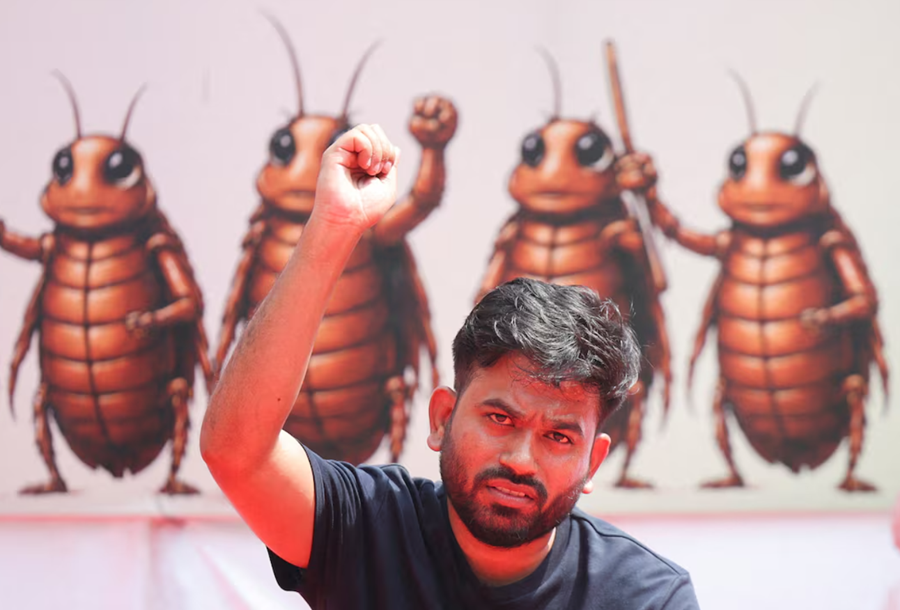
The Cockroach Janta Party began as a joke. Abhijeet Dipke, who had just finished a master’s degree at Boston University and had earlier worked with the Aam Aadmi Party, posted a question on X in May: “What if all cockroaches come together?” The post, a riff on a remark by Chief Justice Surya Kant that likened jobless youngsters to cockroaches, went viral. The chief justice later said his comments were misinterpreted, according to the BBC.
Momentum built around real grievances: unemployment, exam paper leaks and government accountability. Over the summer, the movement led weeks of protests demanding education reform and the resignation of Education Minister Dharmendra Pradhan. In July, the five-week protest wrapped up in celebration after the minister resigned.
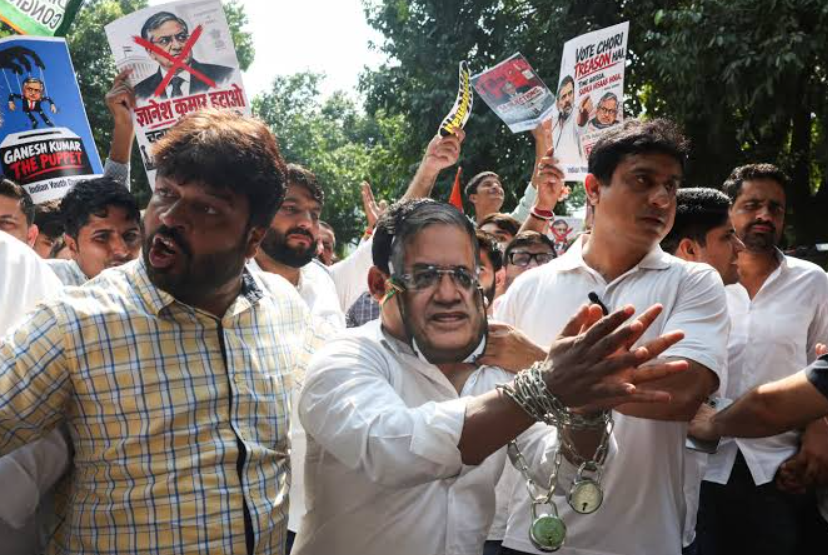
Why Do Protesters Want Gyanesh Kumar to Resign?
What Is the Voter Roll Revision?
Under Kumar, the Election Commission has run a massive nationwide exercise to update electoral rolls, covering roughly one billion voters, according to Daily Sun. The commission calls it routine and says it is meant to weed out dead, duplicate or ineligible voters, the BBC reports. But in many states, tens of thousands of people say they were wrongly removed. The CJP and opposition parties accuse Kumar of favouring the BJP in how the lists are updated, and Al Jazeera adds that opposition parties say deletions affected some recent state results. The Election Commission and the BJP deny the charge.
The Allegations and the Denial
Pressure on Kumar jumped last month after the Indian Express reported that his two deputies had raised at least 14 formal objections over 10 months, covering voter rolls, registration procedures and the commission’s digital systems, Daily Sun reports. Kumar has denied all accusations.
Reactions: Government, Opposition and Rights Groups
The Government’s Response
BJP spokesman Sambit Patra dismissed the protesters as anarchic and called the event a flop, saying what viewers saw on TV and a few social media accounts was not India’s story. He insisted the country was calm and moving ahead under good governance.
Opposition and Students
Congress president Mallikarjun Kharge accused the Modi government of muzzling democracy, saying detentions, jails and batons would not deter the people. Shranaya, a state committee member of the Students’ Federation of India, said the movement would return to the streets before police dragged her off a barricade and into a bus.
Rights Groups Step In
Amnesty International India chair Aakar Patel urged authorities to release everyone held solely for exercising their rights to free expression and peaceful assembly. The Committee to Protect Journalists called on Delhi Police to free detained reporters and let the press cover the protests.
What Happens Next for the Cockroach Janta Party
Not even the protesters seemed to expect a clean win. The Times reported that they knew the odds were against them and planned to regroup. Analyst Sanjay Kapoor told Al Jazeera the government looks panic-driven, while the BJP says India is calm. With several important state elections beginning in early 2027, the argument over voter rolls is not going away. The real test for the Cockroach Janta Party is whether a movement born as online satire, with no registered party behind it, can turn street energy into lasting pressure.
Cockroach Janta Party Timeline
- May 2026: Abhijeet Dipke’s viral X post launches the CJP.
- Summer 2026: Weeks of protests demand education reform; the education minister resigns in July.
- September 2026: Criticism of Kumar grows after an Indian Express report on objections from his deputies.
- October 10, 2026: Delhi locked down; Dipke and other leaders detained.
FAQ
What is the Cockroach Janta Party?
A Gen Z-led satirical political movement that began with a viral May 2026 post by Abhijeet Dipke.
Is it a registered political party?
No. The BBC says it is not registered as a political party in India.
Why was the protest called?
To demand the resignation of Chief Election Commissioner Gyanesh Kumar over the voter roll revision.
How many people were detained?
Al Jazeera says more than 1,000; the BBC says hundreds. Counts vary by source.