

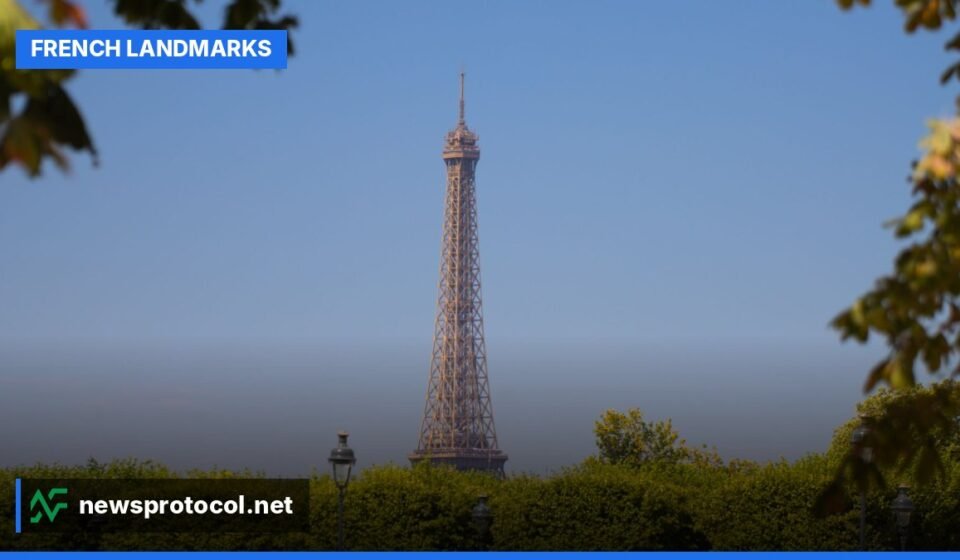

What is France known for? France is primarily known for its rich history, distinct culture, world-renowned cuisine, iconic landmarks like the Eiffel Tower, and its significant role in global politics and diplomacy. The country attracts millions of tourists annually, drawn to its artistic heritage and diverse landscapes.
Key Facts
- France hosted 102 million foreign visitors in 2025, making it the world’s leading tourist destination (Wikipedia).
- The country has 54 UNESCO World Heritage Sites, the fourth-largest number globally (Wikipedia).
- France’s estimated total population in 2026 is over 69.1 million people (Wikipedia).
- Its capital, Paris, has a metropolitan population exceeding 13 million (Wikipedia).
- The French Republic operates as a unitary semi-presidential republic (Wikipedia).
What Defines French Culture and Identity?
French culture and identity are defined by a blend of historical legacy, artistic expression, and a commitment to certain national ideals. The motto “Liberté, égalité, fraternité” (“Liberty, equality, fraternity”) expresses the nation’s ideals, originating from the French Revolution of 1789 (Wikipedia). This revolution also produced the Declaration of the Rights of Man, which continues to influence the country’s values today (Wikipedia).
France has maintained its status as a global center of art, science, cuisine, and philosophy for centuries (Wikipedia). This cultural prominence is reflected in its numerous museums, galleries, and intellectual traditions. The French language itself, official since 1539, is a base of this identity, fostering a sense of unity across its metropolitan and overseas territories (Wikipedia).
What Are France’s Most Famous Landmarks and Tourist Attractions?
France’s most famous landmarks and tourist attractions draw visitors from around the globe, making it the world’s leading tourist destination. The country welcomed 102 million foreign visitors in 2025 (Wikipedia). Paris, as the capital, is home to many of these iconic sites.
The Eiffel Tower, the Louvre Museum, and Notre-Dame Cathedral are among the most recognizable. Beyond Paris, France boasts 54 UNESCO World Heritage Sites, the fourth-largest number globally, according to Wikipedia. These sites include historical cities, ancient Roman ruins, and natural landscapes, showcasing the country’s diverse heritage.
What Is French Cuisine Known For?
French cuisine is known for its sophistication, regional diversity, and careful preparation, holding a centuries-long status as a global culinary center (Wikipedia). Traditional French cooking emphasizes fresh, high-quality ingredients and classic techniques.
Key elements include rich sauces, pastries, and a variety of cheeses. Iconic dishes range from coq au vin and boeuf bourguignon to delicate croissants and macarons. Each region of France contributes its own specialties, from the seafood of the Atlantic coast to the hearty stews of the Alps. The country is also famous for its wine production, with regions like Bordeaux, Burgundy, and Champagne being globally recognized.
How Has France Influenced Art and Philosophy?
France has profoundly influenced art and philosophy, maintaining its status as a global center for these fields for centuries (Wikipedia). In art, France was a cradle for major movements, including Impressionism, Cubism, and Surrealism, with artists like Claude Monet, Pablo Picasso, and Henri Matisse leaving indelible marks.
Philosophically, French thinkers have shaped Western thought from the Enlightenment through existentialism. Figures such as René Descartes, Jean-Jacques Rousseau, Voltaire, and later Jean-Paul Sartre and Albert Camus, contributed ideas that continue to be studied and debated worldwide. The French Revolution’s ideals, expressed in the Declaration of the Rights of Man, also reflect a deep philosophical grounding (Wikipedia).
What Is France’s Role in Global Politics and Economy?
France plays a significant role in global politics and the world economy. It is a great power and one of the five permanent members of the United Nations Security Council, as well as an official nuclear-weapon state (Wikipedia). The country is a member of multiple international organizations and forums, including the G7 and G20, and is a founding member of the European Union (Wikipedia).
Economically, France has one of the largest economies in the world by both nominal GDP and purchasing power parity (PPP)-adjusted GDP (Wikipedia). In 2023, its nominal GDP was $3.1 trillion, making it the third-largest economy in Europe after Germany and the United Kingdom, and the seventh-largest globally, according to the IMF (Wikipedia, fr.wikipedia.org). France is a global leader in sectors such as agri-food, aeronautics, nuclear energy, fashion, and luxury goods (fr.wikipedia.org). The nation’s influence extends to its former colonial empire, with many former colonies retaining close economic and military ties (Wikipedia).
Key Historical Moments in France
France’s history is marked by several key moments that shaped its identity and global standing. These events include Roman annexation, the rise of the Kingdom of France, the French Revolution, and its roles in the World Wars.
The area of Metropolitan France was settled by Celtic tribes, known as Gauls, during the Iron Age before Rome annexed it in 51 BC (Wikipedia). This led to the emergence of a distinct Gallo-Roman culture. In the Early Middle Ages, the Franks established the kingdom of Francia, which became the heartland of the Carolingian Empire (Wikipedia). The Treaty of Verdun in 843 partitioned this empire, with West Francia evolving into the Kingdom of France (Wikipedia).
The French Revolution of 1789 marked a key moment, overthrowing the ancien régime and producing the Declaration of the Rights of Man (Wikipedia). France reached its political and military zenith in the early 19th century under Napoleon Bonaparte, who subjugated much of continental Europe and established the First French Empire (Wikipedia). The country was a major participant in World War I and among the Allies of World War II, though it was occupied by Germany in 1940 (Wikipedia). Following its liberation in 1944, the current Fifth Republic, a semi-presidential system, was formed in 1958 by Charles de Gaulle (Wikipedia).
| Historical Period | Key Event | Approximate Date |
|---|---|---|
| Antiquity | Roman annexation of Gaul | 51 BC |
| Early Middle Ages | Formation of the Kingdom of Francia | 9th century |
| Late 18th Century | French Revolution | 1789 |
| Early 19th Century | First French Empire under Napoleon Bonaparte | 1804-1814 |
| Mid-20th Century | Formation of the Fifth Republic | 1958 |
What Are the Geographic Features of France?
France’s geographic features are diverse, encompassing a variety of landscapes from coastal plains to mountainous regions. Metropolitan France, the European part of the country, is situated at the western end of Europe (fr.wikipedia.org). It is bordered to the northwest by the North Sea and the English Channel, to the west by the Atlantic Ocean, and to the south by the Mediterranean Sea (fr.wikipedia.org).
The country shares land borders with Belgium, Luxembourg, Germany, Switzerland, Italy, Monaco, Spain, and Andorra in Europe (Wikipedia, fr.wikipedia.org). Its eastern, southeastern, and southern borders are often defined by natural features such as the Rhine River, the Jura mountains, Lake Geneva, the Alps, and the Pyrenees (fr.wikipedia.org). Beyond its European mainland, France also includes various overseas territories in the Pacific, Atlantic, and Indian Oceans, as well as in South America (Wikipedia, fr.wikipedia.org). These territories, such as French Guiana, Guadeloupe, and Réunion, contribute to France’s extensive maritime facades and its significant Exclusive Economic Zone (fr.wikipedia.org).
FAQ
What is the capital of France?
The capital of France is Paris. It is also the largest city and the main cultural and economic center, with a metropolitan population of over 13 million people, according to Wikipedia.
What is the official language of France?
The official language of France is French. It has been the language of administration since 1539 and is a key element of the country’s national identity, as stated by Wikipedia.
How many tourists visit France each year?
France is the world’s leading tourist destination, having received 102 million foreign visitors in 2025, according to Wikipedia. This high number is attributed to its iconic landmarks, cultural heritage, and diverse attractions.
What type of government does France have?
France is officially the French Republic, a unitary semi-presidential republic. The current Fifth Republic was formed in 1958 by Charles de Gaulle and operates with a semi-presidential system, according to Wikipedia.
What currency does France use?
France primarily uses the Euro (€) as its currency. In some of its overseas territories, the CFP franc (XPF) is also in use, as noted by Wikipedia.
Sources: en.wikipedia.org – fr.wikipedia.orgUpdated: October 28, 2026.